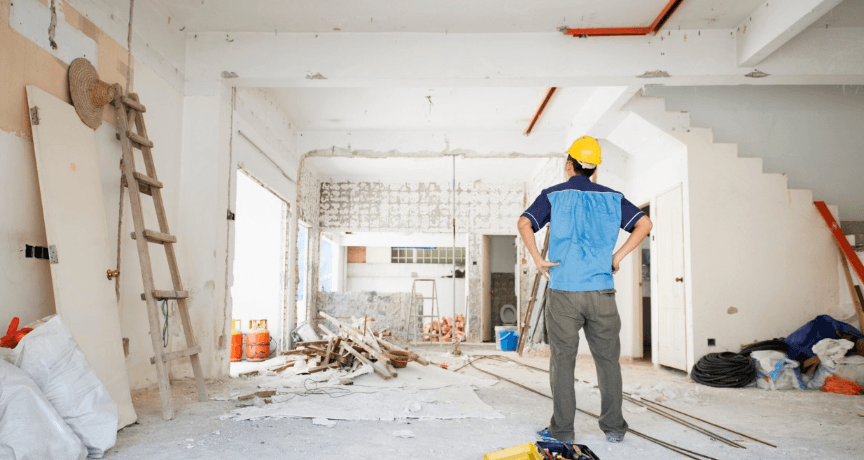
The arithmetic of a house flip looks simple on a spreadsheet. Purchase price, renovation budget, resale value, and the difference is the profit. Investors who have completed several projects know that the spreadsheet version and the actual version diverge in consistent ways, and that the divergence usually appears in the same few places.
Almost none of it is dramatic. Projects rarely fail because the roof turned out to be structurally unsound, though that happens. They erode through timeline slippage, budget creep, holding costs that continue accruing while nothing visible is happening, and a resale that takes longer than assumed at a price slightly below expectation.
Understanding how loans for flipping houses are structured, and how the financing interacts with the project timeline, is a large part of controlling that erosion, because the cost of capital is one of the few project costs that runs continuously whether work is happening or not.
How Project Financing Is Structured
Short-term renovation lending works differently from a conventional mortgage and the mechanics affect how a project is run.
The purchase portion funds at closing, typically covering a percentage of the acquisition price with the investor contributing the balance.
The renovation portion is generally held back and released in draws as work is completed, rather than advanced upfront. This protects the lender and it means the investor funds work before being reimbursed for it.
Draw requests usually require inspection or documentation confirming completion of a defined stage, and the turnaround on that process affects cash flow.
Interest accrues on drawn funds, and terms vary as to whether interest is paid monthly or accrued and settled at payoff.
The term is short, commonly measured in months rather than years, with extension options that carry a cost.
The practical implication is that an investor needs working capital beyond the down payment to fund work between draws, and underestimating that requirement is a common early mistake.
The Timeline Is the Budget
Holding costs are the item most often underestimated, and they scale directly with duration.
Interest on drawn funds continues regardless of whether work is progressing.
Property taxes, insurance, utilities, and any association dues accrue monthly.
Security and maintenance on a vacant property are real costs.
Every month of delay therefore has a fixed price, and the total effect of a three-month overrun on a project planned for six is larger than most investors calculate in advance.
The delays themselves come from a predictable list. Permit processing takes longer than expected. Contractors are unavailable when the schedule needs them. Material lead times, particularly for anything non-standard, extend. Inspections get scheduled around someone else’s calendar. And the work uncovers conditions that were not visible during the walkthrough.
Building contingency into the timeline is not pessimism. It is the difference between a project that completes within its financing term and one that needs an extension.
Where Budgets Break
Renovation overruns follow patterns that are visible to anyone who has done several projects.
Unknown conditions behind walls, under floors, and in mechanical systems account for the largest share. Older properties in particular reveal wiring, plumbing, and structural issues that no inspection could have identified without opening things up.
Scope creep, meaning decisions made during the project to improve on the plan, is enormously common and rarely improves the resale value proportionally.
Contractor pricing changes, whether from change orders or from availability, add up.
Permit and compliance requirements sometimes mandate work that was not in the plan, particularly where previous unpermitted work is discovered.
Finish selection drifts upward, since it is easy to choose a better fixture at each individual decision and hard to notice the aggregate.
Experienced investors carry a contingency of meaningful size rather than a token one, and treat it as expected rather than as reserve.
Being Honest About the Resale
The exit assumption deserves as much scrutiny as the renovation budget.
Comparable sales should be recent, genuinely comparable, and in the same submarket. Optimistic comparable selection is the most common source of a disappointing exit.
Days on market for similar properties tell you how long the sale portion of the timeline will take, and that period continues to accrue holding costs.
Market movement over the project duration is a genuine risk in either direction, and a project underwritten on the assumption that prices will rise is a project with a speculative component.
Selling costs, including agent commission, closing costs, and any concessions, come off the top and are frequently omitted from initial calculations.
Carrying the property through a slower market than expected is the scenario worth planning for, since it determines whether an unsold property becomes an emergency or an inconvenience.
Controlling What Can Be Controlled
Several practices materially improve outcomes.
Get contractor commitments and pricing before closing rather than after, since a project without a contractor lined up starts accruing costs immediately while nothing happens.
Front-load the permit process, because it is the item most likely to sit outside your control and it can be started early.
Sequence work to enable draws, meaning completing defined stages fully rather than progressing everything partially, since a draw requires completion.
Inspect thoroughly before purchase, accepting that some conditions will remain hidden, and price the deal with that in mind.
Underwrite conservatively on both ends: a renovation budget with genuine contingency and a resale figure at the lower end of the comparable range. A deal that works on those numbers is a deal with margin for the things that will go differently.
Planning the Exit Before the Entry
The strongest position is having more than one way out.
A property that can be held and rented if the sale market softens is a fundamentally safer project than one that only works as a quick resale, and knowing whether the rental numbers work is worth establishing before purchase.
That requires knowing what refinancing into longer-term financing would look like, and whether the property would qualify.
An investor with a defined fallback makes better decisions under pressure than one whose only option is to reduce the price until it sells.


 By
By