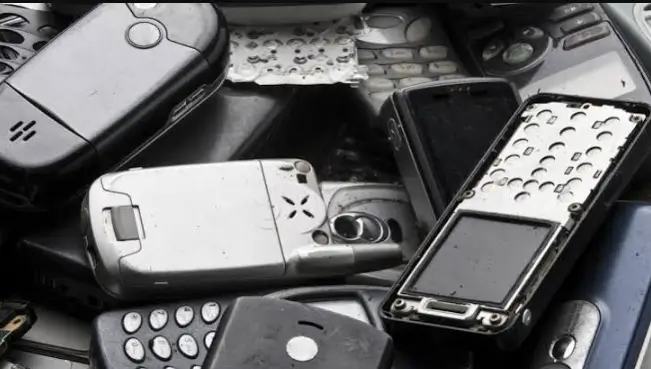
Almost every household has one: a drawer holding two or three phones nobody has switched on in years, kept out of vague unease rather than any plan. old cell phone recycling is one of those tasks that stays undone because it feels both trivial and slightly risky. Understanding why those phones stopped being used, and what is actually inside them, makes the trip worth making.
Phones Don’t Die, Their Updates Do
The usual assumption is that phones get replaced when they break. Mostly they get replaced when they stop being safe.
ERI notes that US consumers replace their phones roughly every two and a half to three years, while security update windows run considerably longer. Samsung generally offers five to seven years of security updates. Google Pixels have received around five years. iPhone security updates end after roughly five years. The lesser-known Fairphone promises seven.
New malware and vulnerabilities appear constantly, and a phone no longer receiving patches becomes a liability rather than a device. That is the real end of life for most handsets, and it explains why the ones in the drawer feel simultaneously fine and unusable.
What Is Actually Inside
A phone is a small, dense collection of materials that are difficult to obtain, which is the argument for recovering them.
- Battery — cobalt, lithium, nickel
- Display — dysprosium, europium, gadolinium, lanthanum, praseodymium, terbium
- Touch screen — indium
- Micro capacitors — tantalum
- Semiconductors — gallium
- Speaker and vibration unit — gadolinium, neodymium, praseodymium, terbium
- Case and connections — magnesium, nickel
These come from a short list of places. Cobalt from Australia, Brazil, Canada, the Democratic Republic of Congo and Zambia. Indium as a byproduct of zinc mining. Lithium from particular rock formations or salt lakes in South America. Several rare earths concentrated in China, Malaysia and Russia.
Mining them causes real damage. Contaminants reach groundwater and soil, and ERI points to a town in Peru dealing with mercury-contaminated water sources as an illustration of what weak regulation produces. Recovery from existing devices avoids repeating that.
The Recycling Rate Leaves Room
ERI cites EPA figures showing roughly 2.7 million tons of consumer electronics generated in 2018, of which about 1.04 million tons were recycled properly. That is a 38.5% recovery rate.
The figure is from 2018 and worth treating as directional rather than current, but the shape of the problem has not changed: most devices are still not reaching a recycler.
Before You Hand Anything Over
Two steps, neither complicated.
Reset the phone to factory default if it still powers on. Data destruction software such as Eraser is an option if you want to go further. If the phone is broken and will not start, you have fewer choices, which is exactly when the provider’s own data handling matters.
Then check who you are giving it to. Look for e-Stewards certification, which commits companies to recycling electronics domestically rather than shipping them overseas. R2 covers sustainability and materials recovery. For data specifically, NAID AAA certification indicates a facility specialising in destruction.
If you are posting the phone, read the shipping policy first. Some providers ask you to remove the battery where possible; others do not mind. Include the charging cable — the plastic and metal in it should be recovered too, not binned.
See also: Personalized Learning Through Tech
Where to Take Them
Retailers handle a meaningful share of consumer volume, with limits.
Best Buy accepts around three cell phones per day at most stores, and also offers a flat-fee service just under $200 covering two major electronics plus as many smaller items as you have. Staples typically accepts about seven items daily, though it varies by store, and sells a Technology Recycling Kit starting at just over $14 where shipping is included in the price and you arrange UPS collection once the box is full. Boxes routed this way reach an ERI facility for processing.
Salvation Army locations take used electronics, refurbishing and selling what still works to fund their programmes and passing the rest to an ITAD provider.
ERI also sells its own prepaid recycling boxes and runs collection events around the country, where residents can bring computers, peripherals, televisions and mobile devices. Those events are for residents rather than businesses. Many local recycling centres accept electronics free of charge as well.
Clearing the Drawer
Old cell phone recycling is a fifteen-minute job protecting materials that took a great deal of damage to extract. Reset what still powers on, check for e-Stewards, R2 or NAID AAA certification, include the cables, and use a retailer programme, a prepaid box or a collection event. Empty the drawer this month and the phones stop being a small nagging decision you keep deferring.


 By
By